

What a group call is actually made of
Stage, room and audience — why a call has tiers, and what the server decides instead of your client.
Three tiers, not two
A one-to-one call is a direct connection between two devices. A group call cannot be: twenty people each sending video to nineteen others is a bandwidth problem with no solution. So a server in the middle receives each stream once and forwards it.
That server also decides who you are in the call. Stage means you can publish audio and video. Room means you are present and can be promoted. Audience means you are watching a stream, not joining a room — a different thing entirely, and much cheaper.
The client does not get to choose
Your device asks to join and is handed a credential that already says which tier it is for. It cannot ask to publish; it can only use what it was given. A client that decided its own permissions would be a client anyone could edit.
Raising a hand is a request. A host grants it, the server mints a new credential, and only then can the device publish. The button on your screen is a message to a person, not a switch on your own microphone.
Sharing a screen
A shared screen is a second video track on the same participant, not a second participant — treat it as one and you get a ghost in the grid and a wrong headcount. When somebody shares, the screen takes the room and the faces drop to a strip beneath it, because the screen is the thing everybody is looking at.
It is letterboxed rather than cropped. A slide with its edges cut off is usually missing the part that was the point.
Keep reading
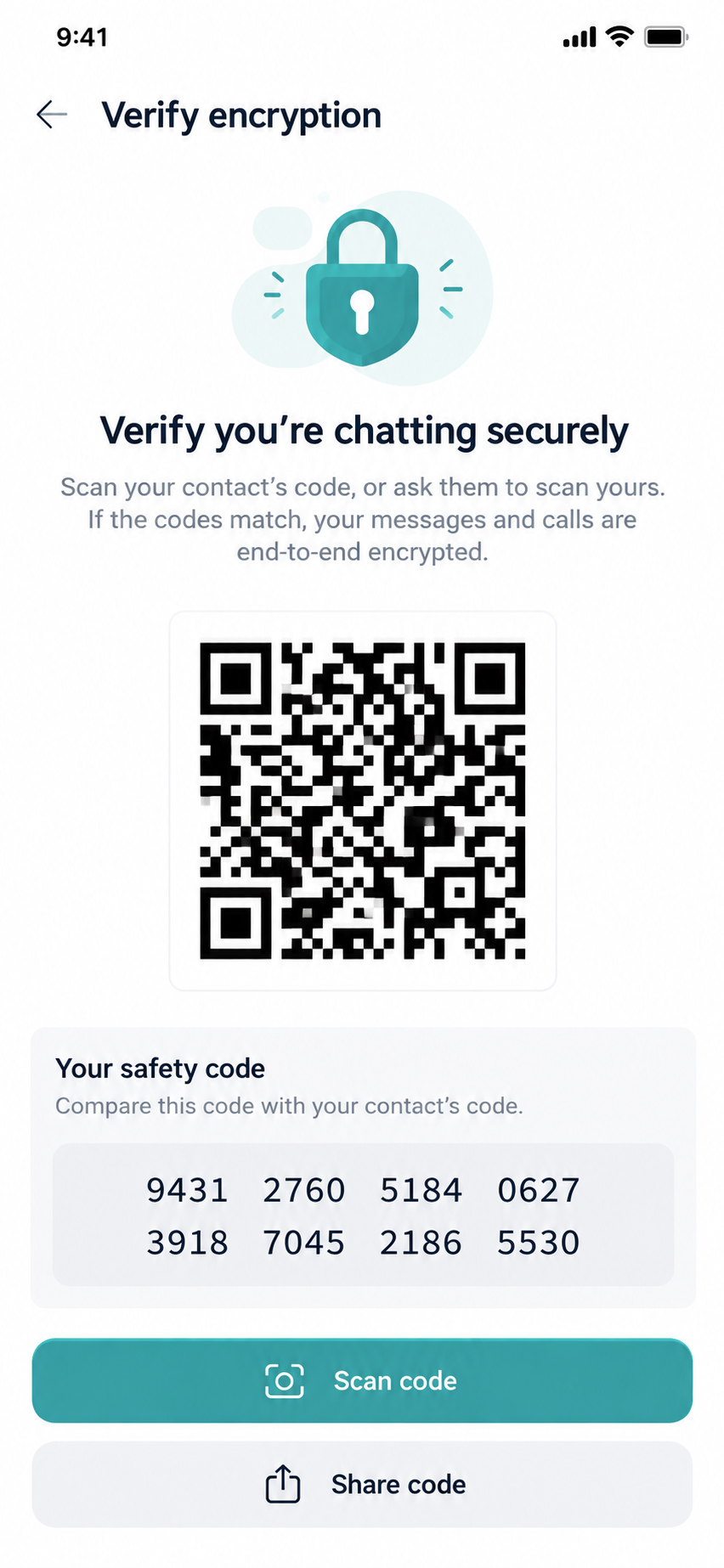
What “end-to-end encrypted” actually means here
Every app says it. Here is the specific thing Afarchat does, the part you can check yourself, and the part we cannot do for you.
Why we call them Flicks
A short video format is not a new idea. What a name buys you is a promise about what the format is for.